
Tiếng Anh 10 Unit 9: Protecting the Environment – Lý thuyết và bài tập
Học chủ đề bảo vệ môi trường qua ví dụ gần gũi, cấu trúc được giải thích bằng tiếng Việt và bài tập tự luyện. Nội dung theo trọng tâm Unit 9 của Tiếng Anh 10 Global Success.
1. Từ vựng theo chủ đề
Đọc câu ví dụ, sau đó thay một chi tiết để tạo câu của em.
| Từ/cụm từ | Nghĩa | Ví dụ |
|---|---|---|
| biodiversity | đa dạng sinh học | Biodiversity supports healthy ecosystems. |
| habitat | môi trường sống | Forests provide habitats for wildlife. |
| endangered | có nguy cơ tuyệt chủng | Endangered animals need protection. |
| deforestation | nạn phá rừng | Deforestation destroys habitats. |
| pollution | ô nhiễm | Pollution affects rivers. |
| conservation | sự bảo tồn | Conservation requires long-term work. |
| ecosystem | hệ sinh thái | A wetland is a valuable ecosystem. |
| protect | bảo vệ | We should protect local habitats. |
| restore | phục hồi | The group helps restore the forest. |
| awareness | nhận thức | Education raises awareness. |
| responsibility | trách nhiệm | Protection is a shared responsibility. |
| evidence | bằng chứng | Use evidence to evaluate a project. |
2. Ngữ pháp và cách vận dụng
Tường thuật câu kể
Said (that) + mệnh đề; told + người nghe + (that) + mệnh đề. Nam said, “I am worried.” → Nam said that he was worried. Trong tường thuật quá khứ, thường lùi thì: present simple → past simple; present continuous → past continuous; will → would; can → could.
Đổi đại từ và thời gian theo ngữ cảnh
“We will plant trees tomorrow,” they said → They said that they would plant trees the next day. Today → that day, now → then, yesterday → the day before khi thời điểm tường thuật thay đổi. Đại từ phải theo người nói/nghe thực tế. Sự thật vẫn đúng có thể không cần lùi thì; bài tập dưới đây chỉ rõ yêu cầu khi cần.
Tường thuật câu hỏi
Yes/no: asked + if/whether + S + V; Wh: asked + từ hỏi + S + V. “Do you recycle?” → She asked me if I recycled. “Where do you live?” → She asked me where I lived. Dùng trật tự câu kể, bỏ do/does/did của câu hỏi; không đảo trợ động từ.
Ví dụ có hướng giải
Report with backshift: Nam said, "I am worried."
- Xác định chủ ngữ, ý nghĩa và dấu hiệu thời gian hoặc cấu trúc được yêu cầu.
- I đổi thành he; am lùi thành was.
- Điền đáp án: Nam said that he was worried.; đọc lại toàn câu để kiểm tra sự hòa hợp.
Lỗi thường gặp
| Câu cần sửa | Cách sửa | Vì sao |
|---|---|---|
| She asked where did I live. | She asked where I lived. | Câu hỏi gián tiếp không đảo did lên trước chủ ngữ. |
3. Phát âm
Nhịp điệu tiếng Anh dựa trên các điểm nhấn. Đọc theo cụm: PROTECT the FOREST / SAVE the WILDLIFE. Từ mang nội dung được nhấn rõ; từ chức năng thường nhẹ hơn. Chia câu dài thành nhóm nghĩa và không ngắt giữa cụm như endangered animals.
Đọc chậm rồi tăng tốc vừa phải. Có thể đối chiếu âm thanh từ điển hoặc học liệu nghe của lớp để tự sửa.
4. Hội thoại và luyện nói
A: What did the guide explain?
B: She said that the young trees needed regular care.
A: Did you ask how to help?
B: Yes. She told us to stay on the marked route.
Luyện theo cặp, đổi vai và thay thông tin bằng tình huống của em. Nói rõ ý, đưa thêm một lý do và phản hồi lịch sự.
5. Bài tập có đáp án
Làm trước khi mở lời giải. Với câu viết, có thể có nhiều đáp án đúng; bài mẫu dùng để đối chiếu cách triển khai và cấu trúc.
Từ vựng, ngữ pháp và phát âm · Câu 1–10
Câu 1. Report with backshift: Nam said, "I am worried."
Xem đáp án và giải thích câu 1
Nam said that he was worried.
I đổi thành he; am lùi thành was.
Câu 2. Report with backshift: Lan said, "I can help."
Xem đáp án và giải thích câu 2
Lan said that she could help.
Can đổi thành could.
Câu 3. Report later: They said, "We will return tomorrow."
Xem đáp án và giải thích câu 3
They said that they would return the next day.
Will → would; tomorrow → the next day.
Câu 4. Choose: She said / told me that the forest was recovering.
Xem đáp án và giải thích câu 4
told
Tell cần người nghe trực tiếp: told me.
Câu 5. Report with backshift: She asked me, "Do you recycle?"
Xem đáp án và giải thích câu 5
She asked me if I recycled.
Câu hỏi yes/no dùng if; trật tự câu kể.
Câu 6. Report with backshift: He asked me, "Where do you live?"
Xem đáp án và giải thích câu 6
He asked me where I lived.
Giữ where, bỏ do, lùi live thành lived.
Câu 7. Correct: She asked where did I live.
Xem đáp án và giải thích câu 7
She asked where I lived.
Câu hỏi gián tiếp không đảo did lên trước chủ ngữ.
Câu 8. The natural home of an animal is its ___.
Xem đáp án và giải thích câu 8
habitat
Habitat là môi trường sống.
Câu 9. Animals at risk of disappearing are ___.
Xem đáp án và giải thích câu 9
endangered
Endangered chỉ nguy cơ tuyệt chủng.
Câu 10. Which words carry the main message in Protect the forest?
Xem đáp án và giải thích câu 10
Protect and forest.
Động từ chính và danh từ chứa nội dung trọng tâm.
Đọc hiểu · Câu 11–16
A local nature group invited our class to learn about a damaged woodland. Before the visit, we expected to spend the whole morning planting trees. The guide explained that restoration involved more than placing young trees in the ground. The team first had to understand the soil, water supply and existing plants so that its work would support the local ecosystem.
During the walk, the guide showed us a patch where native plants were recovering naturally. She said that this area needed protection from trampling rather than additional planting. In another part of the site, volunteers were removing litter along a safe, marked route. We joined them using equipment provided by the organisers and followed the adults' instructions.
Afterwards, we asked how the group knew whether its work was successful. The guide told us that they recorded the survival of young trees and observed changes over time. A photograph taken on planting day could show an activity, but it could not prove that a woodland had recovered. This made us think more carefully about environmental messages we saw online.
Back at school, our report focused on what we had learned. We explained why native habitats mattered and described the group's long-term approach. We also included questions for future research instead of claiming to understand every problem. The visit taught us that protecting nature requires patience, evidence and attention to local conditions. Enthusiasm is valuable, but informed action is even more useful.
Câu 11. What did the class initially expect to do?
Xem đáp án và giải thích câu 11
Plant trees all morning.
Đoạn đầu.
Câu 12. Why did the team study soil and water?
Xem đáp án và giải thích câu 12
To make sure restoration supported the local ecosystem.
Đoạn đầu nêu yêu cầu tìm hiểu điều kiện địa phương.
Câu 13. What did the naturally recovering area need?
Xem đáp án và giải thích câu 13
Protection from trampling.
Đoạn hai.
Câu 14. How did the group evaluate progress?
Xem đáp án và giải thích câu 14
By recording tree survival and observing changes over time.
Đoạn ba.
Câu 15. Why was a planting-day photograph insufficient evidence?
Xem đáp án và giải thích câu 15
It showed an activity but did not prove long-term recovery.
Đoạn ba đối chiếu hoạt động với kết quả.
Câu 16. What three things does protecting nature require in the conclusion?
Xem đáp án và giải thích câu 16
Patience, evidence and attention to local conditions.
Câu kết luận gần cuối.
Viết và vận dụng · Câu 17–20
Câu 17. Report with backshift: The guide said, "We are checking the trees."
Xem đáp án và giải thích câu 17
The guide said that they were checking the trees.
We đổi thành they theo nhóm hướng dẫn; are checking → were checking.
Câu 18. Report with backshift: Lan asked me, "Can you join us?"
Xem đáp án và giải thích câu 18
Lan asked me if I could join them.
Câu yes/no; you → I, us → them theo vai người tường thuật.
Câu 19. Apologise for accidentally stepping off a marked path.
Xem đáp án và giải thích câu 19
I'm sorry I stepped off the path. I'll stay on it from now on.
Nhận lỗi cụ thể và nêu cách sửa.
Câu 20. Write 120–150 words about an environmental group's activities.
Xem đáp án và giải thích câu 20
Plan: introduce its purpose; describe two actions; explain how results can be checked; report one comment; conclude.
Bài mẫu:
In this fictional example, a group called Woodland Friends works to protect a small local forest. Its volunteers remove litter along marked routes and help care for native plants. Before organising an activity, they ask a trained guide which areas need attention. Some places are recovering naturally and should be left undisturbed. The coordinator said that protecting young plants was just as important as planting new ones. The group records changes over several months instead of judging success from a single photograph. It also visits schools to explain why habitats matter. Students can help by learning about local wildlife and following the organisers' instructions during supervised visits. I like this approach because it combines enthusiasm with evidence. It shows that environmental protection requires patient work and respect for local conditions.
Nếu dùng nhóm giả định, nói rõ đó là ví dụ. Không bịa số liệu của tổ chức có thật; kiểm tra cấu trúc said/told và lùi thì theo ngữ cảnh.
6. Quan sát ảnh và dùng tiếng Anh
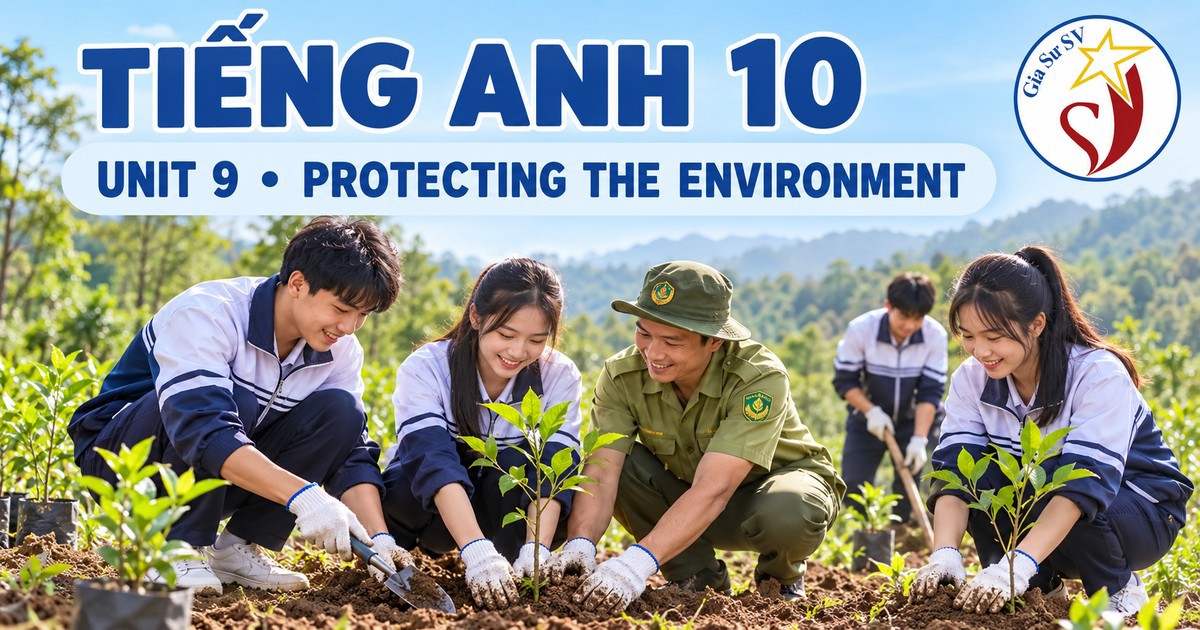
Quan sát ảnh đầu bài. Trả lời bằng câu đầy đủ, dùng chi tiết nhìn thấy hoặc liên hệ hợp lý với chủ đề.
Câu 21. What are the volunteers doing?
Xem đáp án và giải thích câu 21
They are planting young trees.
Đối chiếu chi tiết có trong ảnh, rồi chọn từ vựng phù hợp.
Câu 22. Write two sentences about the picture or a related situation.
Xem đáp án và giải thích câu 22
The volunteers are working with an adult guide. Young trees need care after they are planted.
Đáp án mẫu; một câu mô tả hoặc nhận diện chi tiết, một câu liên hệ chủ đề. Các cách diễn đạt đúng khác đều được chấp nhận.
7. Ghi nhớ cuối bài
Said (that) + mệnh đề; told + người nghe + (that) + mệnh đề.
“We will plant trees tomorrow,” they said → They said that they would plant trees the next day.
Yes/no: asked + if/whether + S + V; Wh: asked + từ hỏi + S + V.
Đặt hai câu mới, giải thích một lỗi thường gặp và làm lại câu đã sai sau một ngày.
Biên soạn: Gia Sư SV.