
Tiếng Anh 10 Unit 2: Humans and the Environment – Lý thuyết và bài tập
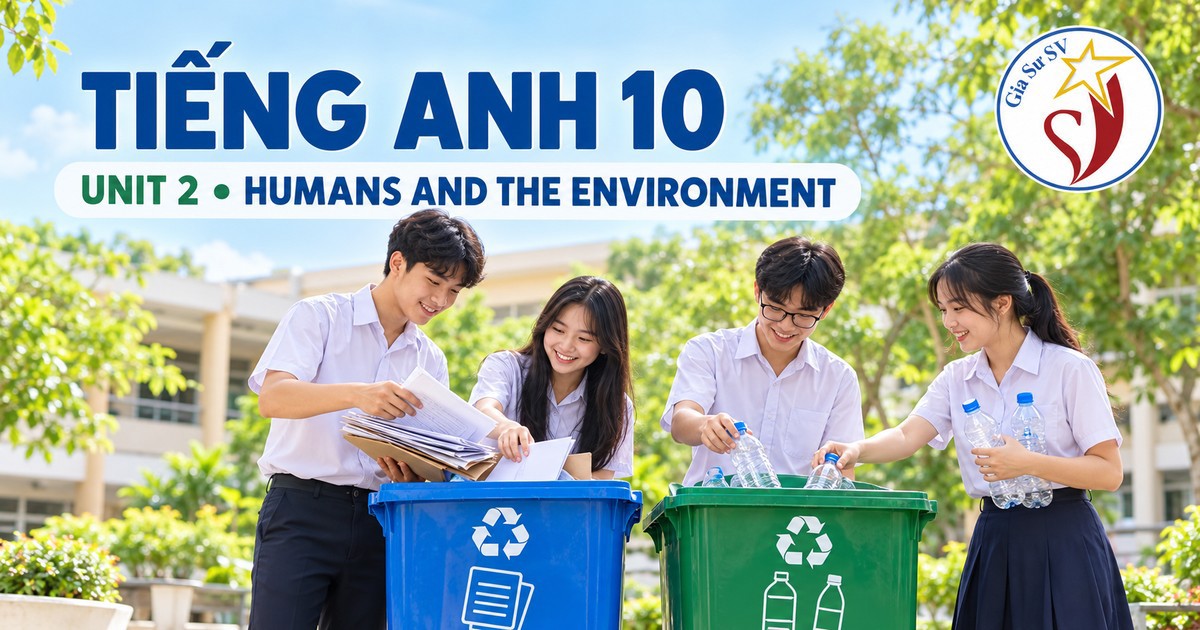
Học chủ đề con người và môi trường qua ví dụ gần gũi, cấu trúc được giải thích bằng tiếng Việt và bài tập tự luyện. Nội dung theo trọng tâm Unit 2 của Tiếng Anh 10 Global Success.
1. Từ vựng theo chủ đề
Đọc câu ví dụ, sau đó thay một chi tiết để tạo câu của em.
| Từ/cụm từ | Nghĩa | Ví dụ |
|---|---|---|
| carbon footprint | dấu chân carbon | Walking can reduce our carbon footprint. |
| eco-friendly | thân thiện môi trường | We choose eco-friendly products. |
| reusable | có thể tái sử dụng | Bring a reusable bottle. |
| recycle | tái chế | We recycle clean paper. |
| reduce | giảm | We should reduce waste. |
| emission | khí thải; sự phát thải | Transport produces emissions. |
| organic | hữu cơ | The shop sells organic vegetables. |
| sustainable | bền vững | We need sustainable habits. |
| appliance | thiết bị gia dụng | Turn off unused appliances. |
| energy-saving | tiết kiệm năng lượng | Use energy-saving lights. |
| raise awareness | nâng cao nhận thức | The campaign raises awareness. |
| litter | rác vứt bừa bãi | Never leave litter in the park. |
2. Ngữ pháp và cách vận dụng
Will và be going to
Will + V dùng cho quyết định ngay lúc nói, lời hứa hoặc dự đoán theo nhận định: I will carry that box for you. Be going to + V dùng cho dự định có trước hoặc dự đoán có dấu hiệu hiện tại: We are going to plant trees on Sunday. Look at those clouds! It is going to rain.
Bị động hiện tại và quá khứ đơn
Đưa đối tượng chịu tác động lên làm chủ ngữ. Hiện tại: S + am/is/are + V3. Quá khứ: S + was/were + V3. People collect paper here → Paper is collected here. They planted these trees last year → These trees were planted last year. By + người thực hiện chỉ cần khi thông tin đó quan trọng.
Quy trình chuyển câu
Xác định tân ngữ, chọn be đúng thì và số, đổi động từ sang V3, rồi thêm tác nhân nếu cần. Không dùng nguyên mẫu sau be trong câu bị động. We use these bins → These bins are used, không phải are use.
Ví dụ có hướng giải
We have already made a plan. We ___ plant trees on Sunday.
- Xác định chủ ngữ, ý nghĩa và dấu hiệu thời gian hoặc cấu trúc được yêu cầu.
- Dự định đã có trước dùng be going to.
- Điền đáp án: are going to; đọc lại toàn câu để kiểm tra sự hòa hợp.
Lỗi thường gặp
| Câu cần sửa | Cách sửa | Vì sao |
|---|---|---|
| Plastic bottles are collect here. | Plastic bottles are collected here. | Bị động cần quá khứ phân từ collected. |
3. Phát âm
Luyện /kl/ clean, /pl/ plant, /gr/ green và /pr/ protect. Giữ đủ hai phụ âm, không đọc thành hai âm tiết. Đọc: Green plants help keep our playground clean.
Đọc chậm rồi tăng tốc vừa phải. Có thể đối chiếu âm thanh từ điển hoặc học liệu nghe của lớp để tự sửa.
4. Hội thoại và luyện nói
A: What are we going to change at school?
B: We are going to use fewer disposable cups.
A: How can I help?
B: You can bring a reusable bottle.
Luyện theo cặp, đổi vai và thay thông tin bằng tình huống của em. Nói rõ ý, đưa thêm một lý do và phản hồi lịch sự.
5. Bài tập có đáp án
Làm trước khi mở lời giải. Với câu viết, có thể có nhiều đáp án đúng; bài mẫu dùng để đối chiếu cách triển khai và cấu trúc.
Từ vựng, ngữ pháp và phát âm · Câu 1–10
Câu 1. We have already made a plan. We ___ plant trees on Sunday.
Xem đáp án và giải thích câu 1
are going to
Dự định đã có trước dùng be going to.
Câu 2. This box is heavy. I ___ help you!
Xem đáp án và giải thích câu 2
will
Quyết định giúp ngay khi nói.
Câu 3. Look at the dark clouds! It ___ rain.
Xem đáp án và giải thích câu 3
is going to
Dự đoán dựa trên dấu hiệu hiện tại.
Câu 4. Paper ___ separately here every day. (collect)
Xem đáp án và giải thích câu 4
is collected
Hiện tại đơn bị động; paper không đếm được.
Câu 5. These trees ___ last year. (plant)
Xem đáp án và giải thích câu 5
were planted
Quá khứ bị động; chủ ngữ số nhiều.
Câu 6. Turn into passive: Students clean the classroom daily.
Xem đáp án và giải thích câu 6
The classroom is cleaned daily by students.
Đưa classroom lên chủ ngữ; dùng is cleaned.
Câu 7. Correct: Plastic bottles are collect here.
Xem đáp án và giải thích câu 7
Plastic bottles are collected here.
Bị động cần quá khứ phân từ collected.
Câu 8. A bottle you can use many times is ___.
Xem đáp án và giải thích câu 8
reusable
Reusable nghĩa là có thể dùng lại.
Câu 9. Complete: We should reduce our carbon ___.
Xem đáp án và giải thích câu 9
footprint
Cụm carbon footprint.
Câu 10. Which blend starts green?
Xem đáp án và giải thích câu 10
/gr/
Green bắt đầu bằng /gr/.
Đọc hiểu · Câu 11–16
The Green Steps club wants to make school events less wasteful. Its members first observed a sports afternoon and counted the disposable cups left near the playground. They did not blame individual students. Instead, they asked why so many cups were needed. Several students explained that there was nowhere convenient to refill a water bottle.
The club is going to ask the school for a refill station near the sports area. Until that is possible, members will bring large containers of drinking water to small club events, with permission from teachers. Everyone is encouraged to bring a reusable bottle. Clear signs are placed beside the containers so visitors know where to get water.
The students also checked the recycling bins. Some contained food waste mixed with paper, which made the paper difficult to recycle. They designed picture labels and gave a short demonstration during an assembly. Clean paper is now collected separately, while leftover food is put into the appropriate waste container.
At the next event, the club will count disposable cups again and compare the results. The members know that one activity cannot solve every environmental problem. However, measuring changes helps them decide what works. Their teacher reminds them that an effective green plan should be practical, safe and easy to repeat. The club hopes its habits will spread beyond school and into family life.
Câu 11. Why were many disposable cups needed?
Xem đáp án và giải thích câu 11
There was no convenient place to refill bottles.
Đoạn đầu giải thích nguyên nhân thực tế.
Câu 12. Where does the club want a refill station?
Xem đáp án và giải thích câu 12
Near the sports area.
Đầu đoạn hai.
Câu 13. What are visitors encouraged to bring?
Xem đáp án và giải thích câu 13
A reusable bottle.
Chi tiết đoạn hai.
Câu 14. Why was some paper difficult to recycle?
Xem đáp án và giải thích câu 14
It was mixed with food waste.
Đoạn ba nêu vấn đề phân loại.
Câu 15. How will the club evaluate its work?
Xem đáp án và giải thích câu 15
It will count disposable cups again and compare the results.
Đoạn cuối nêu cách đo thay đổi.
Câu 16. What three qualities should a green plan have?
Xem đáp án và giải thích câu 16
It should be practical, safe and easy to repeat.
Lời nhắc của giáo viên trong đoạn cuối.
Viết và vận dụng · Câu 17–20
Câu 17. Change to passive: They installed the lights yesterday.
Xem đáp án và giải thích câu 17
The lights were installed yesterday.
Yesterday yêu cầu quá khứ; lights số nhiều.
Câu 18. Promise to save electricity.
Xem đáp án và giải thích câu 18
I will turn off the lights when I leave the room.
Will dùng để hứa; sau when chỉ tương lai dùng hiện tại đơn.
Câu 19. Suggest one realistic way to reduce school waste.
Xem đáp án và giải thích câu 19
We can provide refill stations and encourage reusable bottles.
Đáp án mẫu; hành động cụ thể gắn với nguyên nhân.
Câu 20. Write 120–150 words about a green plan for your school.
Xem đáp án và giải thích câu 20
Plan: name the problem; give two actions; say who will help; explain how you will measure results; conclude.
Bài mẫu:
Our school is going to start a project to reduce disposable cups. Many students buy drinks during sports activities, and a large number of cups are thrown away afterwards. First, we are going to ask for a safe water refill point near the playground. Students will be encouraged to bring reusable bottles. Second, our club will prepare clear signs and explain the plan during an assembly. Teachers can help us check that the water is suitable for drinking. Before the project begins, we will count the cups used at one event. We will repeat the count a month later to see whether our actions have helped. I believe this practical plan will make a difference because it gives students an easy alternative to buying another disposable cup.
Kiểm tra một dự định với be going to, một dự đoán/lời hứa với will và ít nhất một câu bị động đúng. Nêu biện pháp thực tế thay vì chỉ nói protect the environment.
6. Quan sát ảnh và dùng tiếng Anh
Quan sát ảnh đầu bài. Trả lời bằng câu đầy đủ, dùng chi tiết nhìn thấy hoặc liên hệ hợp lý với chủ đề.
Câu 21. What materials are the students sorting?
Xem đáp án và giải thích câu 21
They are sorting paper and plastic bottles.
Đối chiếu chi tiết có trong ảnh, rồi chọn từ vựng phù hợp.
Câu 22. Write two sentences about the picture or a related situation.
Xem đáp án và giải thích câu 22
The students are putting paper into a recycling bin. Sorting waste can make recycling easier.
Đáp án mẫu; một câu mô tả hoặc nhận diện chi tiết, một câu liên hệ chủ đề. Các cách diễn đạt đúng khác đều được chấp nhận.
7. Ghi nhớ cuối bài
Will + V dùng cho quyết định ngay lúc nói, lời hứa hoặc dự đoán theo nhận định: I will carry that box for you.
Đưa đối tượng chịu tác động lên làm chủ ngữ.
Xác định tân ngữ, chọn be đúng thì và số, đổi động từ sang V3, rồi thêm tác nhân nếu cần.
Đặt hai câu mới, giải thích một lỗi thường gặp và làm lại câu đã sai sau một ngày.
Biên soạn: Gia Sư SV.